
DOMAIN MAGAZINE
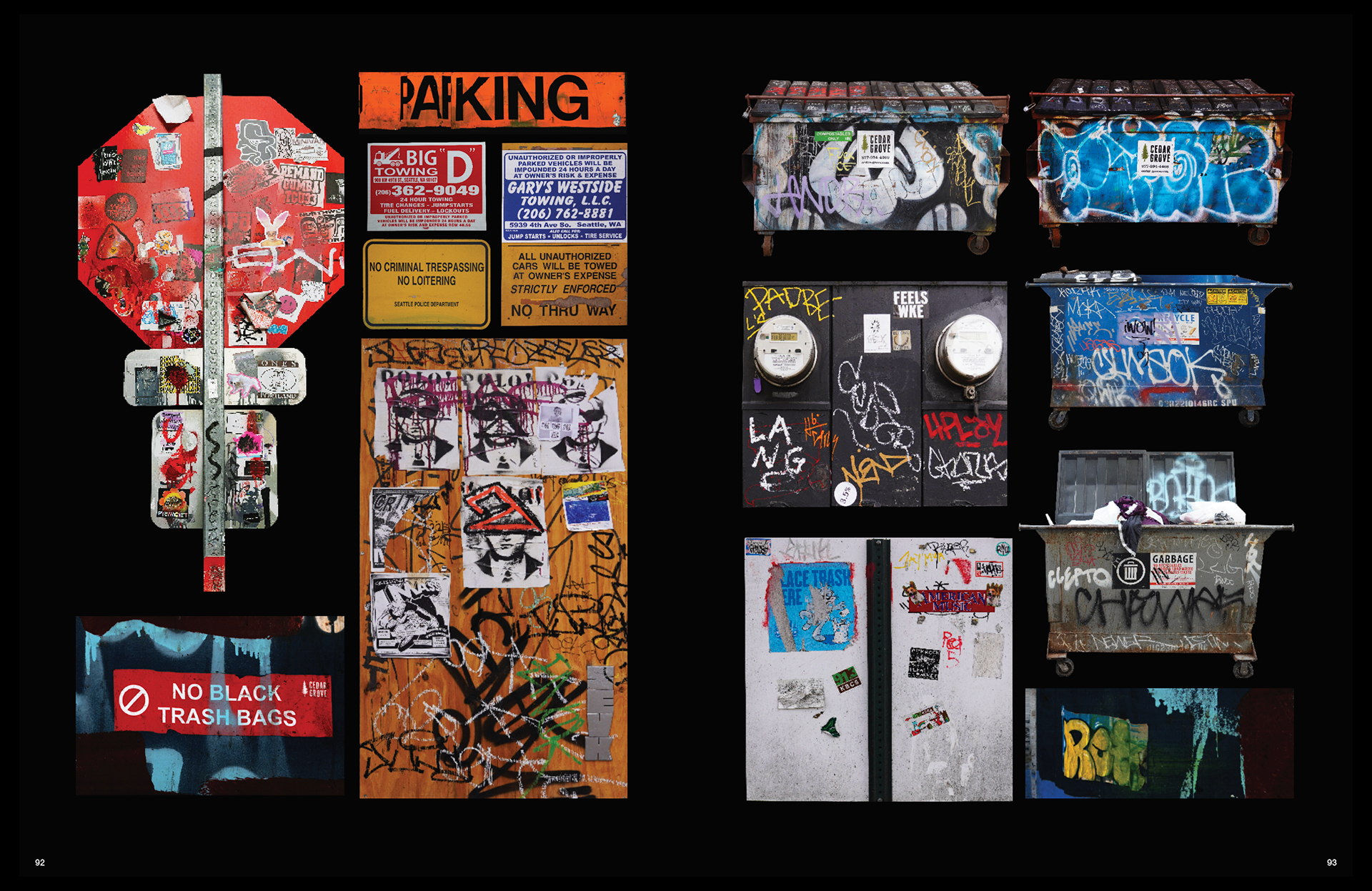
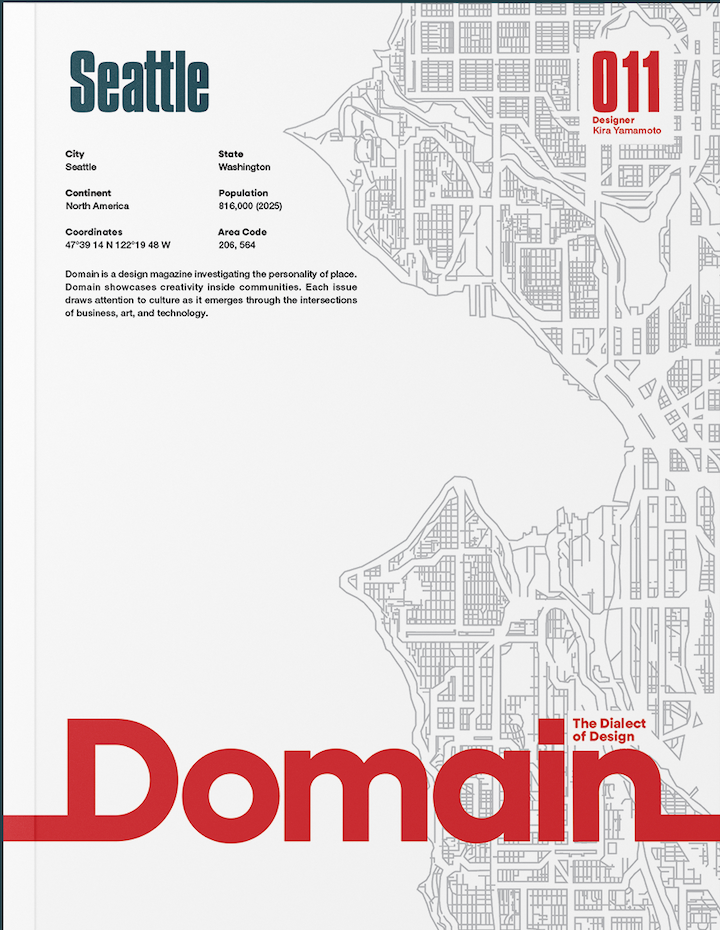
Domain is a 138-page editorial design project rooted in a personal relationship with place. Born from years of living in and photographing Seattle, Washington, Domain is a design-forward magazine that examines how creativity surfaces within specific communities, tracing the intersections of business, art, and technology to reveal the visual language a city builds for itself. Domain investigates place as identity. Each issue dissects a community's character through its street art, wayfinding systems, branding, advertising, and the broader design vernacular that gives a neighborhood its voice.
TOOLS USED Adobe InDesign, Adobe Illustrator, Procreate, Sony A6400/Sigma 18-50mm F2.8 lens, Adobe Photoshop.
ROLES AND SKILLS Print production, Art direction, Illustration, Typography, Editing, Copywriting, Photography.
RESEARCH AND DEMOGRAPHICS
The project began with audience research. Domain's primary readership spans ages 20–75 who are design-curious travelers, cultural enthusiasts, and locals seeking a richer connection to their city. The magazine functions as both an immersive artifact for Seattleites and an invitation for outside audiences to experience a community through a design lens.
PROCESS AND WORK
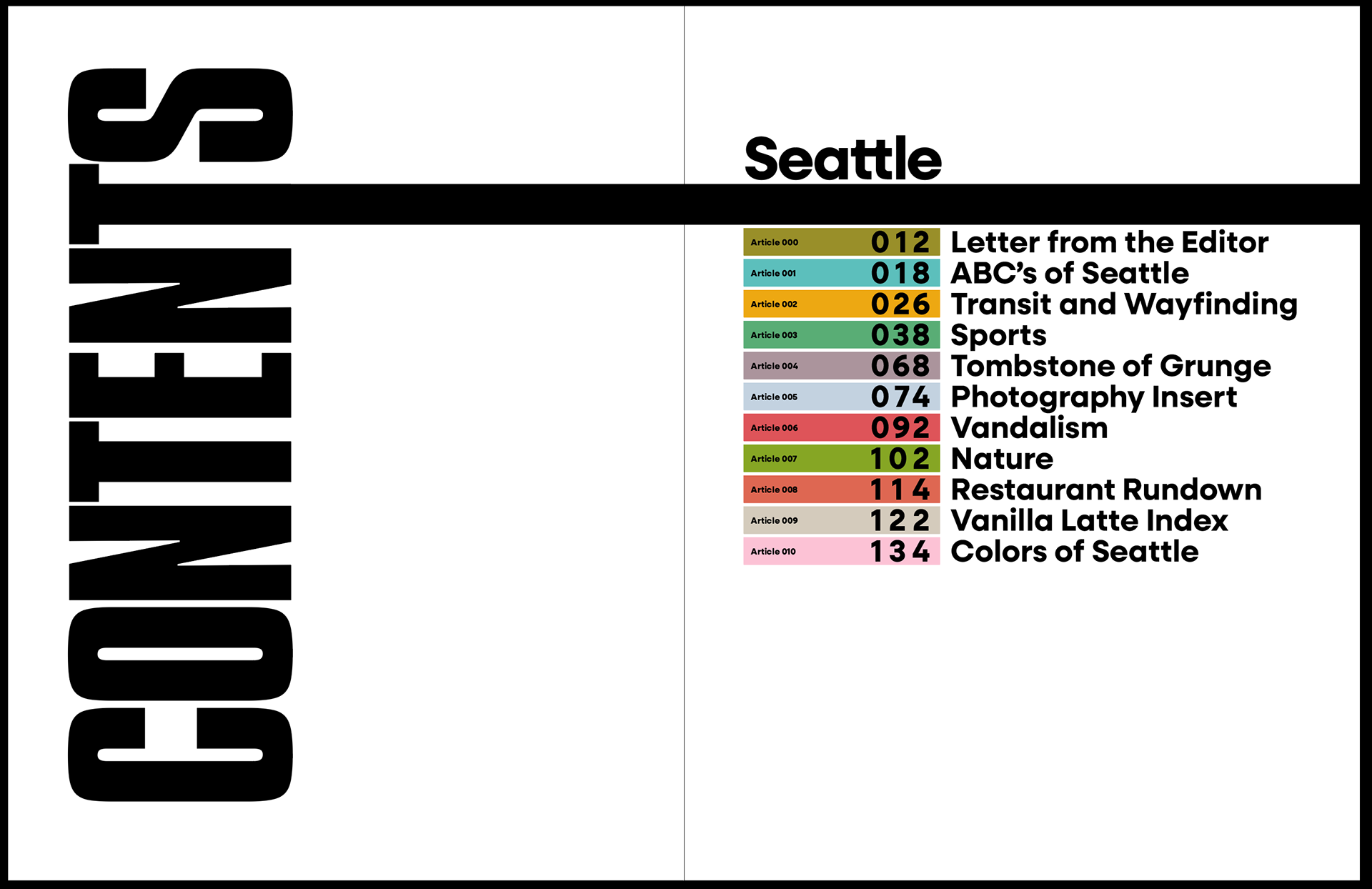
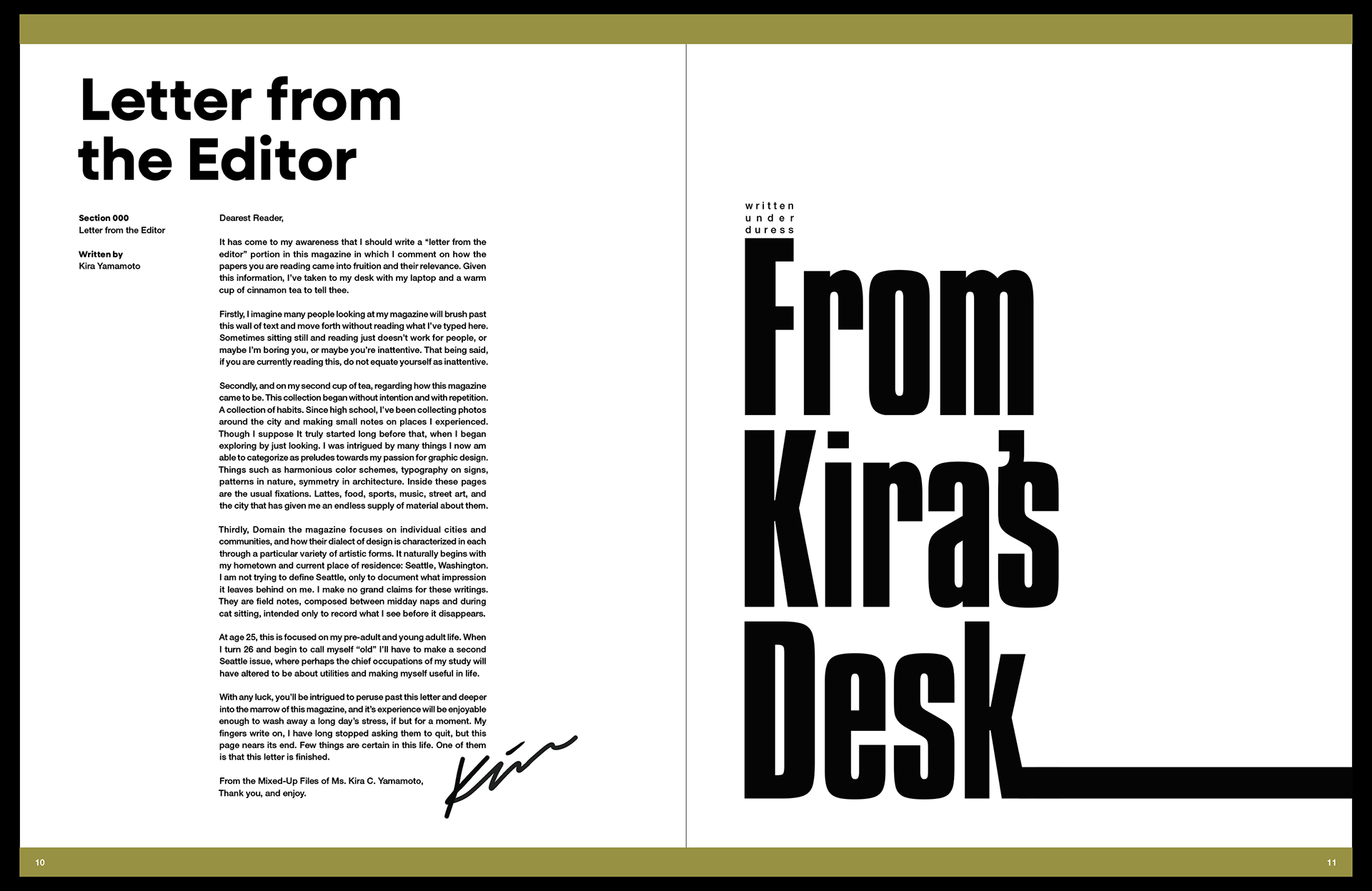
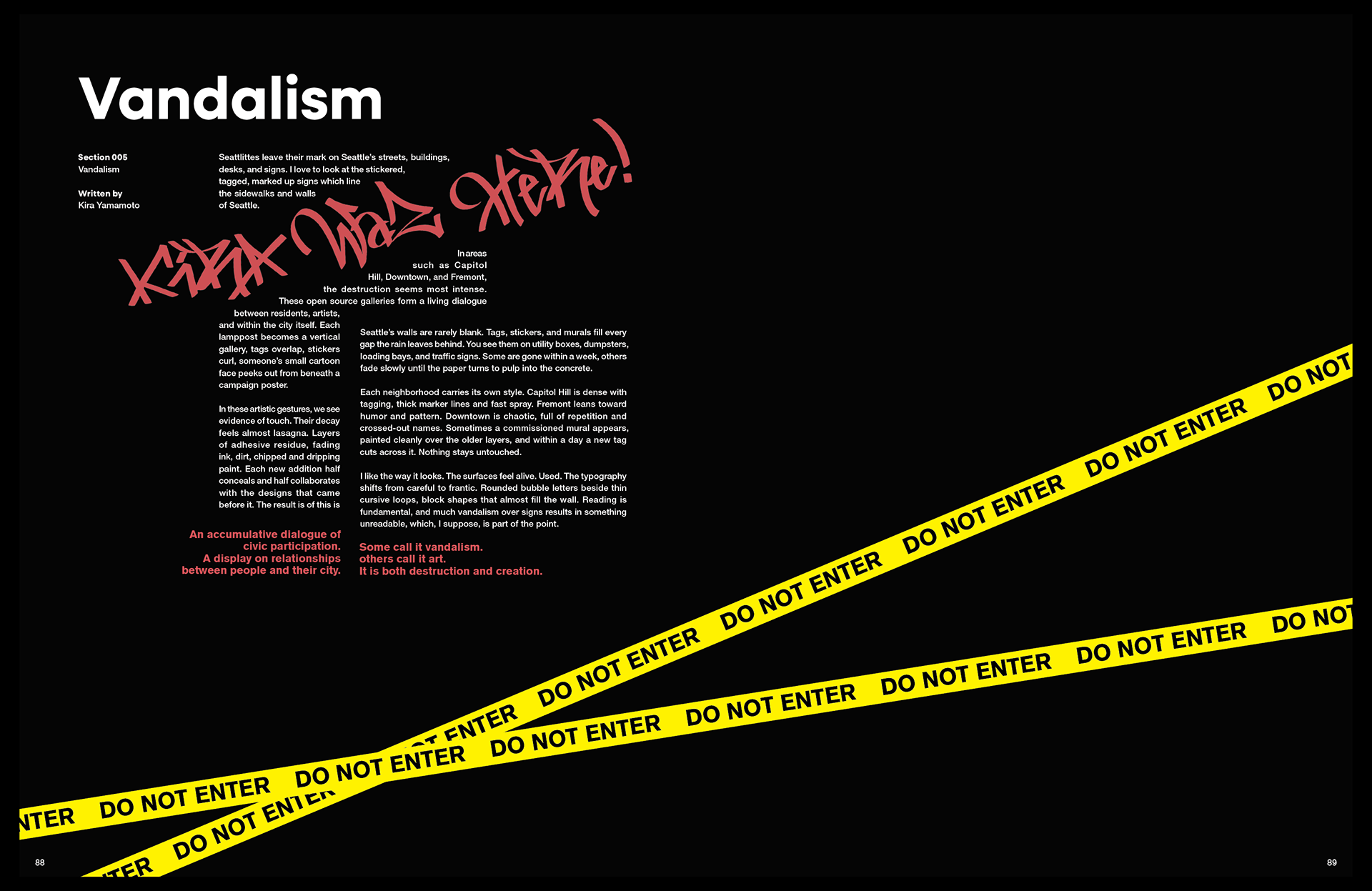
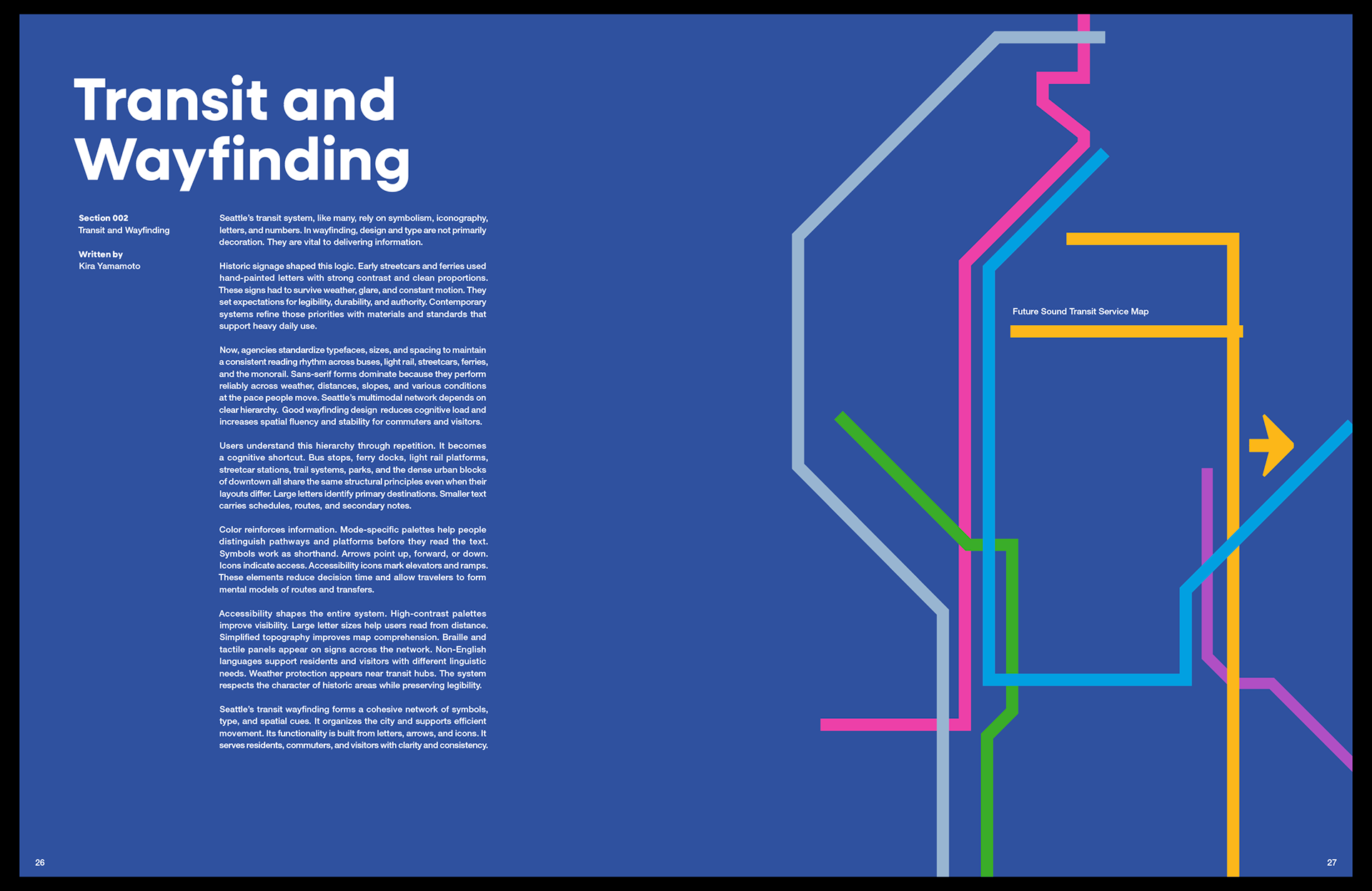
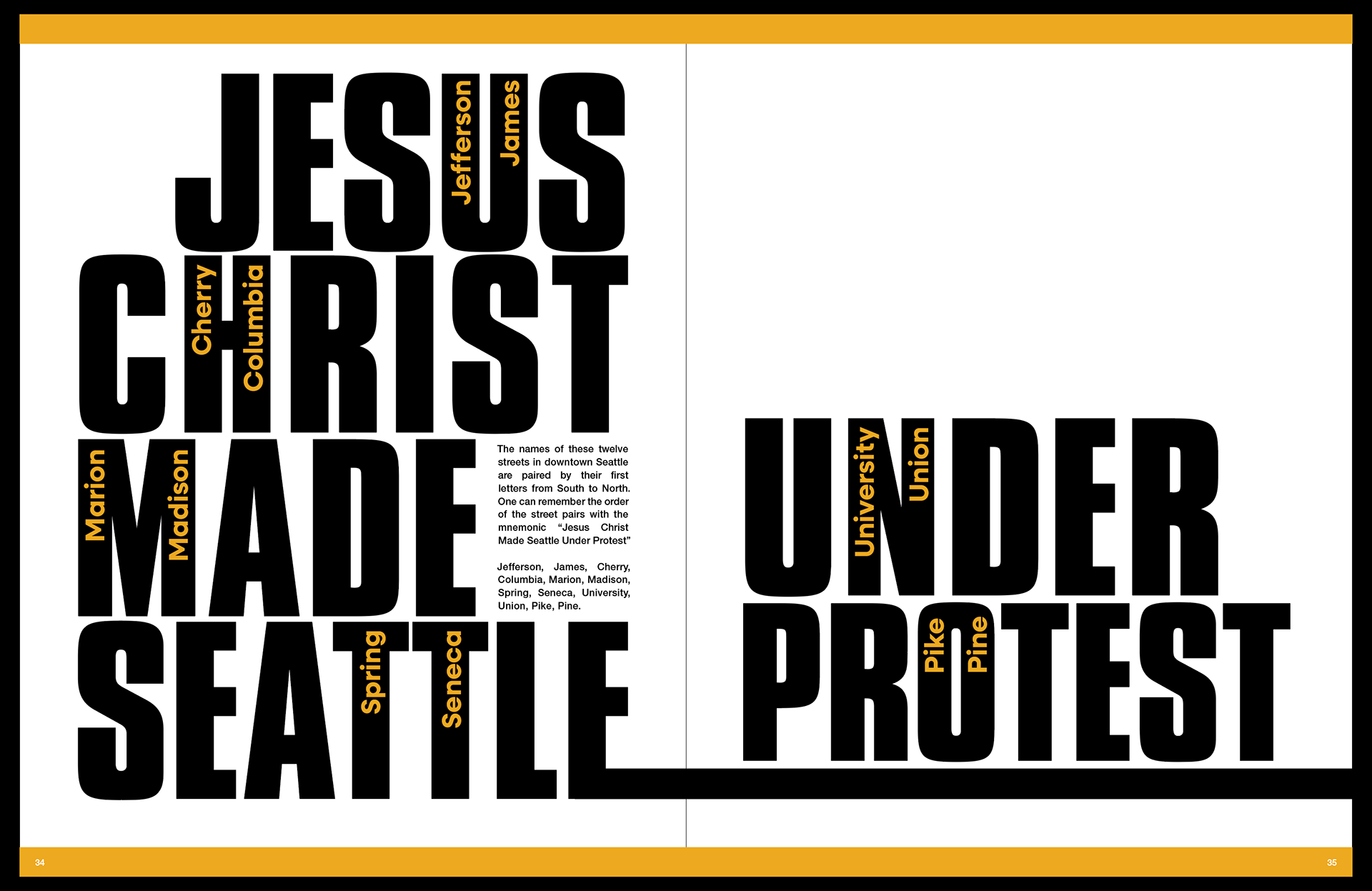
I built a design recipe, a system of constraints that kept my decisions consistent and purposeful and to harmonize my articles and create consistency as a brand. My recipe established generous negative space, large-scale, occasionally experimental display headers, a four-column grid, and justified body text. I chose tones like Space Needle Grey, Conifer Green, and Pacific Blue, and Orca Black to immerse the reader into the colors of the community. Much of the photography was sourced from my own archive, this kept the imagery intimate and authentic rather than stock. For body text, I selected Helvetica Neue LT Pro 65 Medium at 8pt with 11pt leading. After multiple print tests, this struck the right balance between a utilitarian readability and softer warmth. Paired with that you will see Compacta, selected for Seattle because its denseness resembled the metropolis, and variation in height mirrored the multileveled hills of the city,